Crook Farm History

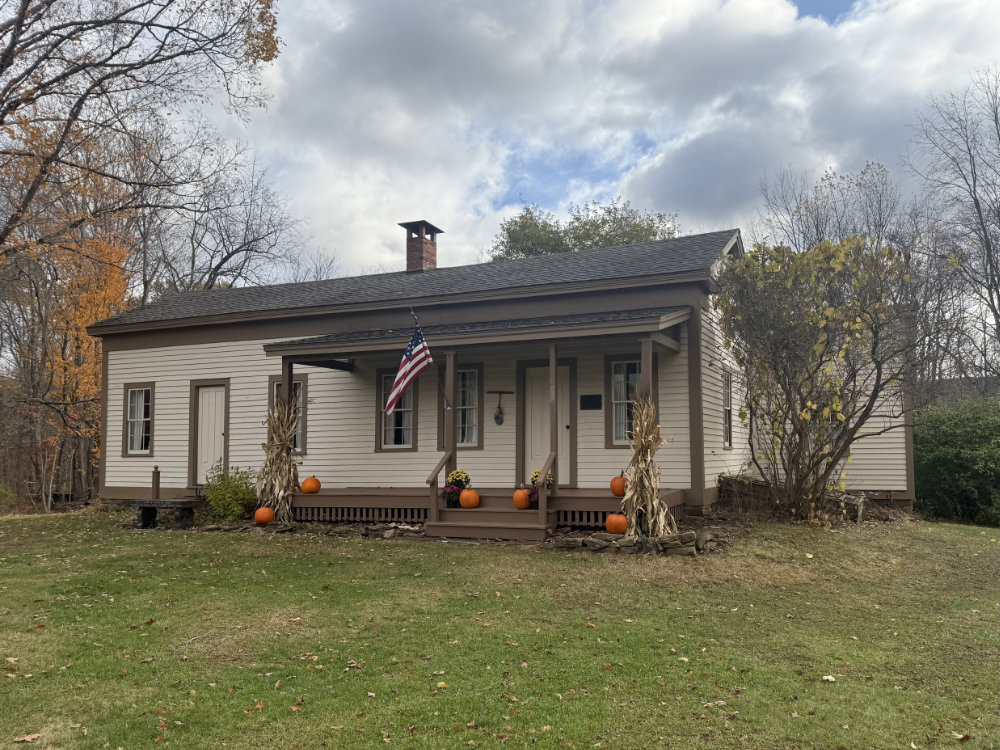
Crook Farmhouse - during fall

About the farm

The Crook Farm is an integral part of the Bradford Landmark Society. Unlike the Herbig Bakery, which serves as the headquarters and research center of the Society, the Crook Farm showcases the living history of the area’s early settlers in a unique country setting.

From the very beginning of the Bradford Landmark Society in 1969, the founders dreamed of a living history exhibit that would demonstrate the hardships and living conditions of early settlers. The Crook Farm of today is, in part, a realization of that dream.

The Landmark Society’s original vision was the creation of an oil field village/farm that would showcase the era of the small oil producer, complete with a derrick, lease house, a boiler house, machine shop, tin house, oil field equipment and possibly a miniature nitroglycerine plant. A small railroad was considered. All building would be furnished with artifacts of the period and it was hoped to have this accomplished by the nation’s Bicentennial in 1976.

The search for a location was a goal of the new Landmark Society, and in 1972, the discovery of a small farm in Foster Township that would soon be for sale seemed ideal. It had all the requirements: the property had been continuously occupied for four generations of the Crook family who had engaged in farming, the homestead was one of the oldest surviving houses in the area, and the property was the site of Bradford’s first large producing well – the famous Olmsted Well. In addition, invaluable background materials from the family were available, including a detailed diary, old photographs, personal papers, and artifacts. Its location was perfect, too - on the outskirts of Bradford and adjacent to Route 219. The rear of the property was the Tuna Creek.
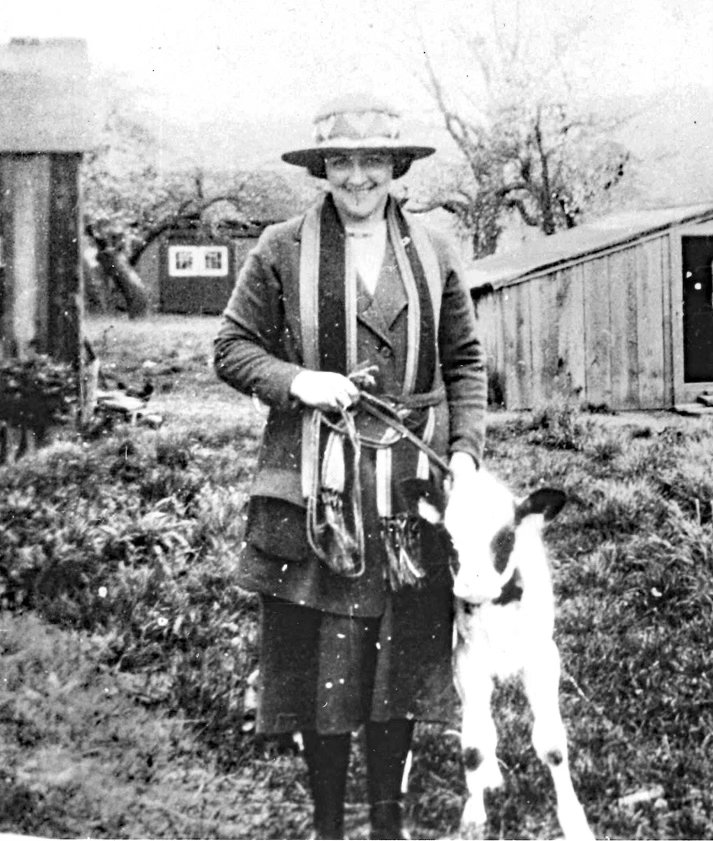
The farm was owned by Genevieve Crook Rapp, a grandchild of Erastus and Betsy Crook, the first generation settler in the valley.  The Crooks came to the area by canoe from Olean, NY and purchased the farm in 1853.  Mrs. Rapp was in a nursing home but was eager to sell the homestead to someone who would preserve the antiquity of the house.  An agreement was reached, and the Bradford Landmark Society bought the farm in 1974 for $17,000.
Extreme care was taken during the restoration of the property.  Detailed advice from the Pennsylvania Historic and Museum Commission as well as architects and preservation experts resulted in a “go slow” approach for accuracy and authenticity.  
The preservation of the farmhouse was so successful that it was placed on the Pennsylvania Register of Historic Places in 1975 and the National Register in March 1976.


Genevieve Crook Rapp, at the farm, c. 1940
Genevieve Crook Rapp, at the farm, c. 1940

The Society soon realized that the potential of the Crook Farm exceeded that of a simple oil village.  From the beginning the educational aspect of the property was paramount and the Landmark began to acquire buildings of the appropriate period to add to the property.  
The first acquisition was the Crooker House School on West Corydon Street.  It was donated by Mrs. Robert Purtle in June 1975 and moved to the site that summer.  Extensive renovation on the interior resulted in the school being opened for the Crook Farm School Program in 1979.
Every farm needs a barn, and in 1979 the old Stack farm barn from up the road was dismantled and moved to the property and reassembled.  Ironically, an architect at the time believed that this barn might have actually been the original Crook barn which had been moved to the Stack farm years ago; in a sense, the barn was “coming home” to its original site. 
A storage shed was constructed on the side of the barn in 1982.  A carpenter shop, cement pad for entertainment, and a loft in the barn were added in 1983.  In 1984 the Society acquired a small freight station, now used as the Weaver’s shed.
In 1985, a footbridge was built across Latshaw creek by students from Bradford High School, and another storage unit added to the rear of the barn.  In 1986  Mr.  & Mrs. Robert Bromeley donated the money to construct a summer kitchen addition to the farmhouse.  The blacksmith shop was constructed in 1987 and the candle shop donated by Thomas Bromeley that same year. A replica of the first bank in Bradford, the Whitney-Wheeler bank, was erected beside the schoolhouse in 1998.


Country Fair

Country Fair

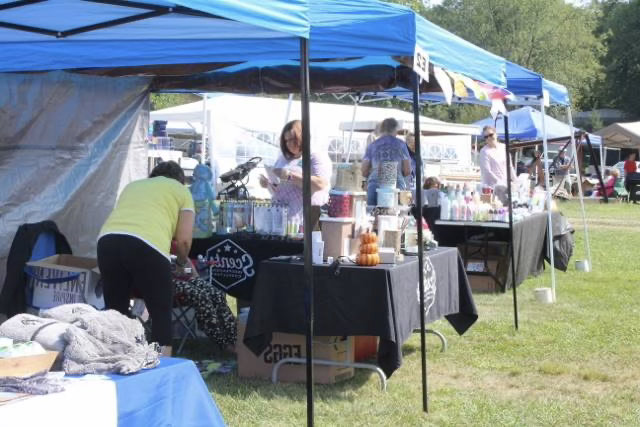
 In 1979, the first Crook Farm Country Fair was held. Traditionally, it is held the last weekend in August.  Thousands of visitors have enjoyed this annual event.  It celebrates its 40th anniversary this year, and is staffed by many volunteers from all types of social organizations in Bradford, who support the Bradford Landmark Society.  Recently, Old Time Music festival has been added to the Fair, and it is a popular treat for music lovers. 
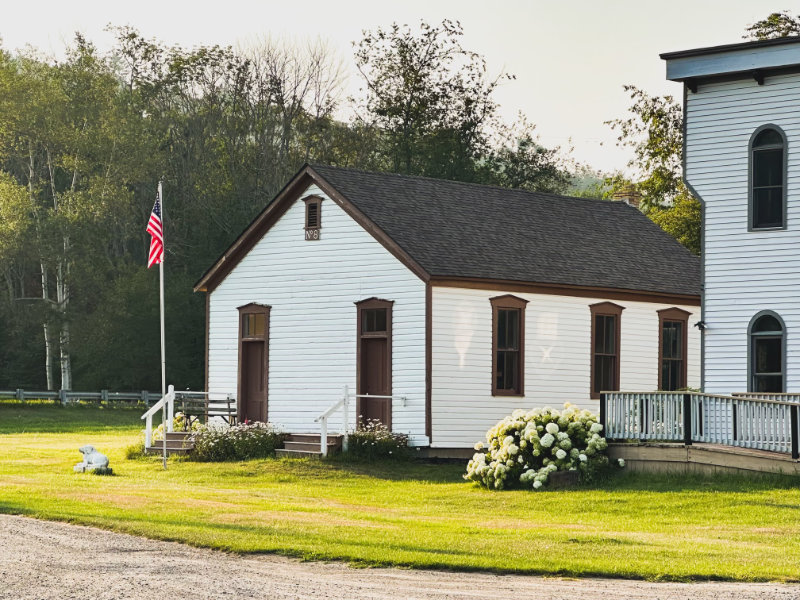
That same year, Beulah Blair, a retired school teacher, began the Crook Farm School Program.  To date, nearly 28,000 school children have participated in this annual spring event, where students experience 19th century life through a unique educational program.  In May through June, school children from Pennsylvania and New York State visit the farm to learn about "the good old days", make candles, attend a one-room school, weave, and, for a day at least, live like the children did at the turn of the century. 
Today, the Crook Farm is the pride of the Bradford Landmark Society and is proud to continue its legacy to future generations.


School View

Support Crook Farm

Follow us on Facebook

Sign up for the Crook Farm mailing list